Insight
3/6/26
Silicon to Sovereignty: How 20 Years of Solar Will Power the AI Century — And Why SolrX Is Engineering the Intersection
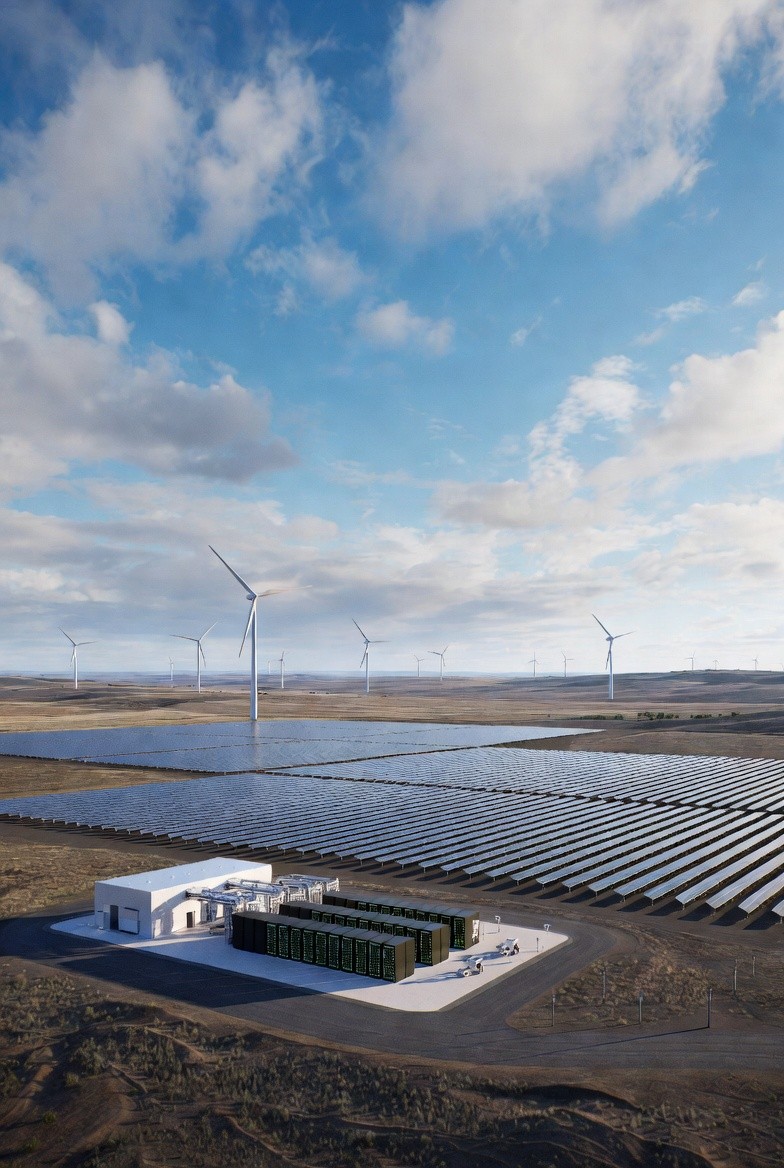
The solar industry stands at an inflection point that will define infrastructure investment for the next two decades. Global photovoltaic capacity will surge from 2.2 terawatts today to 7 terawatts by 2030 and 8.5 terawatts by 2050, with 80% of that growth driven by a single demand catalyst that didn't exist five years ago: artificial intelligence. For investors who understand this convergence, solar is no longer a "clean energy play" — it's the foundational infrastructure of the digital economy.
The Numbers Tell a $3 Trillion Story
Data center power demand will nearly double from 860 TWh in 2025 to 1,587 TWh by 2030, with AI workloads accounting for most of that increase. Goldman Sachs forecasts 165% growth in data center electricity consumption by decade's end, requiring $720 billion in grid upgrades alone. Meanwhile, Moody's projects $3 trillion in data center infrastructure investment through 2030 — and every megawatt needs a power source.
Solar wins this race because of physics and economics. IEA data confirms that by 2030, renewables will supply 45% of global electricity generation, with solar and wind accounting for 96% of new capacity additions. The reason is simple: solar is now the cheapest and fastest way to add large-scale power, with behind-the-meter installations reaching commercial operation in months versus 3-15 years for alternatives.
Technology Roadmap: Efficiency Meets Scale
The solar panels powering 2046's data campuses will bear little resemblance to today's silicon. Current commercial modules deliver 21-23% efficiency with bifacial TOPCon and HJT technologies pushing toward 24-26%. But the real transformation arrives with perovskite-silicon tandem cells, already achieving 33.9% efficiency in lab settings and expected to reach 30%+ in mass production by 2030.
These aren't incremental gains — they're platform shifts. A 30% efficient panel generates 25% more energy per square meter than today's best silicon, slashing land requirements for data campuses and improving project economics even as hardware costs continue falling. Chinese manufacturers drove module prices to €0.10/W in 2025; tandem cells could reach €0.20-0.24/W by 2028 while delivering superior energy density.
Bifaciality factors are climbing too: HJT modules now capture 85-95% efficiency on rear surfaces versus 70-75% for standard bifacial PERC. On high-albedo surfaces like data center rooftops or gravel-covered ground mounts, this translates to 15-25% additional energy yield — pure margin expansion for platforms engineered around it.
AI-Driven Solar: The $18 Billion Optimization Layer
Artificial intelligence isn't just consuming power — it's making solar generation radically more efficient. The global solar AI market will expand from $5.96 billion in 2024 to $18.43 billion by 2030 at 20.8% CAGR, driven by machine learning models that optimize everything from panel placement to storage dispatch.
AI algorithms now analyze satellite imagery, shading patterns, and historical weather data to design systems with 10-15% higher output than human engineers. Predictive maintenance models forecast component failures weeks in advance, reducing downtime and extending asset life. Grid integration software balances intermittent generation with real-time demand, enabling solar-plus-storage to replace gas peakers in evening peaks.
For data center operators, this creates a self-reinforcing loop: AI workloads drive power demand, which accelerates solar deployment, which generates training data that improves AI forecasting, which makes solar more bankable for the next wave of financing.
Behind-the-Meter Becomes Mainstream
The structural shift toward behind-the-meter solar will reshape infrastructure valuations over the next decade. At least 25% of incremental data center demand through 2030 will be met by BTM solutions, bypassing grid interconnection queues that now routinely exceed 4-5 years.
LandGate reports 30+ BTM solar-data partnerships emerged in 2025 alone, with developers securing 15-25 year offtake agreements from creditworthy hyperscalers. The economics are irresistible: BTM solar delivers power at €0.04-0.06/kWh versus €0.14-0.18/kWh industrial grid tariffs, while providing additionality that passes SBTi climate commitments.
By 2030, data centers could account for 83% of commercial and industrial BTM storage deployments, according to Benchmark Energy. The US alone expects 600+ GWh of energy storage by 2030, with battery costs falling 40% since 2020 and flow batteries emerging for long-duration backup.
Regional Power Shifts: Where the Campuses Will Rise
Asia Pacific will host over half of the world's 8.5 TW solar capacity by 2050, led by China's target of 1,200 GW of combined solar and wind by 2030. But the fastest growth in solar-data integration will occur in strategically positioned emerging markets where land, power costs, and regulatory flexibility converge.
Serbia exemplifies this opportunity. At the fiber crossroads between Frankfurt and Istanbul, the country offers 15-25ms latency to Western Europe, technological neutrality for all global operators, and industrial power at half of Northwest EU pricing. Government-backed data center expansion and accelerated permitting create first-mover advantages for platforms that can combine solar yield with digital infrastructure.
This explains why projects like SolrX — pairing 32 MWp solar with 55 hectares of data-ready land and private-wire corridors — represent the blueprint for the next wave of infrastructure investment. The platform doesn't choose between energy or compute: it engineers them as a single, bankable asset.
Investment Implications: The 20-Year View
Solar infrastructure valuations are undergoing permanent re-rating. Traditional utility-scale projects trade at 7-9× EBITDA for merchant yield. Add a corporate PPA and multiples expand to 9-11×. But solar platforms with integrated data-campus optionality — where land, power, and offtake are pre-engineered — command 12-18× on blended EBITDA, matching digital infrastructure rather than commodity electrons.
The math scales dramatically. A 32 MWp solar farm generating €2.3M EBITDA at 9× yields a €20.7M valuation. The same asset with a landlord model (land lease + BTM power) delivering €4M combined EBITDA at 11× reaches €44M. Fully developed with operating colocation revenue at 15×, valuations exceed €60M on the same land footprint.
Infrastructure funds entering early capture core yield while preserving optionality. Growth equity and digital infrastructure specialists can participate in Phase 4 data-campus development, riding the valuation escalator as the platform transforms from electrons to exabytes.
By 2046, the question won't be whether data centers run on solar — they'll have no choice. Grid constraints, carbon mandates, and economic physics make dedicated renewable supply inevitable. The only question is which platforms will own the intersection, and which investors will have secured positions before the market reprices the convergence.
The SolrX Thesis in Context
Platforms like SolrX sit at the exact nexus of these 20-year mega-trends: emerging market cost advantages, behind-the-meter economics, institutional-grade execution, and data-campus optionality. With 32 MWp of phased solar using Tier-1 hardware at €0.34/W, private-wire corridors pre-engineered for Tier-III facilities, and 55 hectares of freehold land in a connectivity-competitive jurisdiction, the platform delivers what infrastructure capital seeks: transparent risk, contractable upside, and alignment with the structural shift powering the AI century.
The solar market won't just grow over the next 20 years — it will become the energy backbone of digital civilization. Early movers who engineer platforms rather than projects will capture disproportionate value as the world realizes that silicon doesn't just compute: it generates.