Insight
2/1/26
The Future of Solar Energy
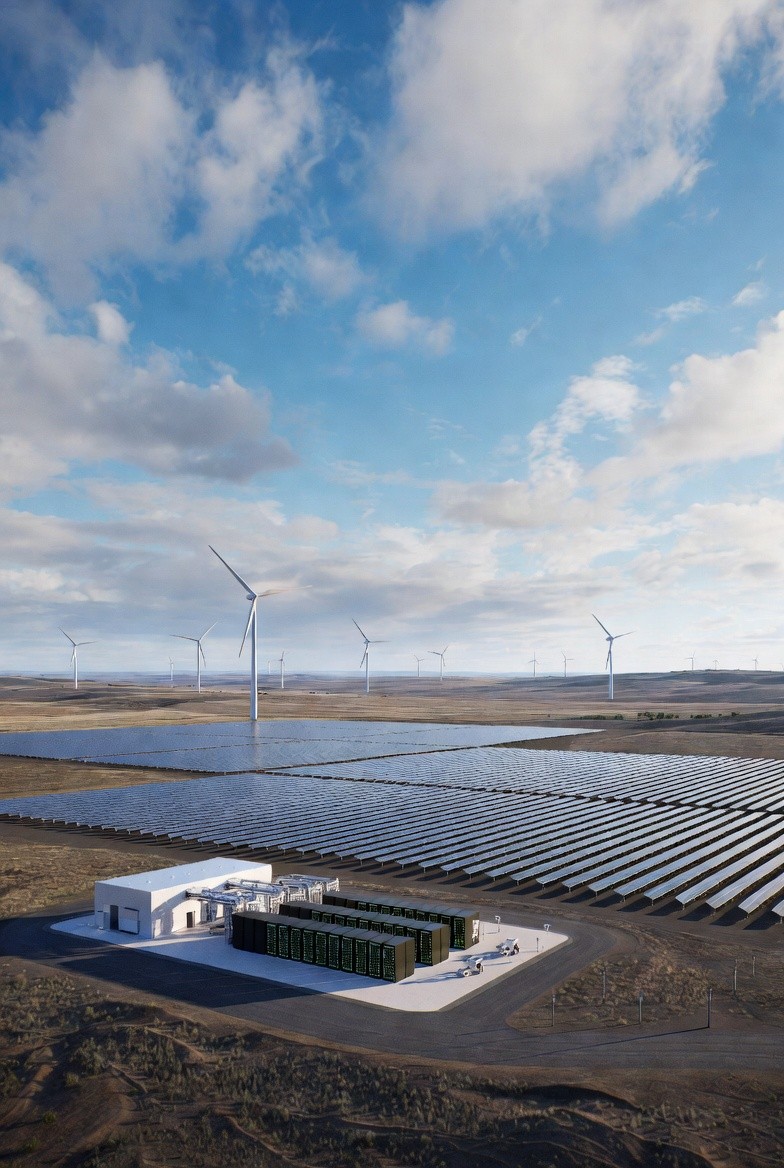
The explosion of artificial intelligence has created the most urgent energy challenge of our generation: data centers will consume 8-12% of global electricity by 2030, up from 2-3% today, with AI workloads alone driving half of that growth. For infrastructure investors, this isn't just a tech story—it's the largest structural power demand shift since the industrialization of computing itself, creating a $1 trillion opportunity in solar, storage, and grid infrastructure over the next decade.freight systems don’t just slow down shipments—they erode margins, create risk, and make it nearly impossible to deliver consistent service at scale. For growing businesses in logistics, infrastructure, or energy-adjacent sectors, these inefficiencies become bottlenecks that can’t be solved by throwing more resources at the problem.
AI's Insatiable Power Appetite
Goldman Sachs Research projects data center power demand will surge 165% to 84 GW by 2027, with AI growing from 14% to 27% of total workloads. The International Energy Agency forecasts 945 TWh annually by 2030—equivalent to Japan's entire electricity consumption. In the US alone, data centers will drive 50% of electricity demand growth, consuming more power than steel, cement, and chemicals combined.
Why the surge? Modern AI models like GPT-4 require 10-100x more compute than their predecessors, with training runs consuming megawatt-hours per model iteration. NVIDIA's H100 GPUs—the workhorses of AI—draw 700W each, and clusters of 10,000+ GPUs can exceed 10 MW continuous load. Cooling adds another 40% overhead.
Hyperscalers committed $75B to renewable procurement in 2025, but traditional utility-scale PPAs face 4-5 year interconnection queues and transmission costs eating 25-30% of delivered energy. Investors who understand this mismatch see solar + data center co-location as the decade's highest-conviction infrastructure theme.
Behind-the-Meter: The New Gold Standard
Enter behind-the-meter (BTM) solar—dedicated generation sited directly adjacent to data centers, bypassing grid queues and transmission charges. LandGate reports 30+ BTM projects emerged in 2025 alone, with solar developers securing offtake from creditworthy hyperscalers faster than utility RFPs allow.
Economic case: BTM solar delivers power at €0.04-0.06/kWh—40-60% below industrial grid tariffs—while providing additionality (new capacity built for specific demand) that passes SBTi and corporate climate scrutiny. Meta and Zelestra's recent expansion shows hyperscalers prioritizing BTM for both cost and ESG credibility.
For investors, BTM flips traditional risk. Corporate PPAs provide 15-25 year revenue certainty, enabling non-recourse project finance at investment-grade spreads. LandGate notes BTM sites command 2-3x premiums over pure utility solar due to offtake security.
The Valuation Flywheel
Solar + data center platforms create multiple exit paths with expanding multiples:
Solar Core: 7-9× EBITDA (merchant yield)
Solar + PPA: 9-11× (contracted stability)
Solar + Landlord Model: 10-12× (land lease + BTM power)
Full Data Campus: 12-18× (operating colocation/AI compute)
IFM Investors highlights digital infrastructure funds achieving 15%+ IRRs through similar "energy + compute" strategies. NextEnergy Capital calls solar PV the largest renewable investment category at 54% of total deployment.
Regional Hotspots Emerging
United States: DOE identified 16 federal sites for integrated data center + nuclear/solar campuses.
Europe: Ireland's private-wire policy unlocks BTM solar; Serbia emerges as connectivity hub.
Asia: Singapore mandates 100% renewable colocation power by 2030.
Serbia stands out with technological neutrality, low industrial baseline (~€0.14/kWh), and fiber positioning rivaling Vienna. Platforms like SolrX exemplify the model: 55 hectares freehold land, phased 32 MWp solar, private-wire ready for Tier-III campuses.
Investment Implications
Infrastructure Funds: Enter early for core solar yield (7-9×), exit to digital specialists
Growth Equity: Capture 12-18× campus multiples post-Phase 4 leasing
Debt Providers: Non-recourse BTM PPAs offer stable cash flows, IG spreads
McKinsey forecasts AI power demand will force $720B in grid investment alone. Platforms solving the "solar + compute" nexus capture disproportionate value.
The Next Move
Investors face a binary choice: participate in the structural shift powering AI's trillion-dollar economy, or watch from the sidelines as hyperscalers and digital infrastructure funds consolidate the best sites. BTM solar platforms like SolrX aren't speculative—they're the logical response to physics (energy density limits), economics (transmission costs), and regulation (Scope 2 mandates).
The question isn't whether data centers need dedicated clean power. It's which infrastructure managers will own the platforms making it happen.