News
3/3/26
SolrX & Serbia's Advantage
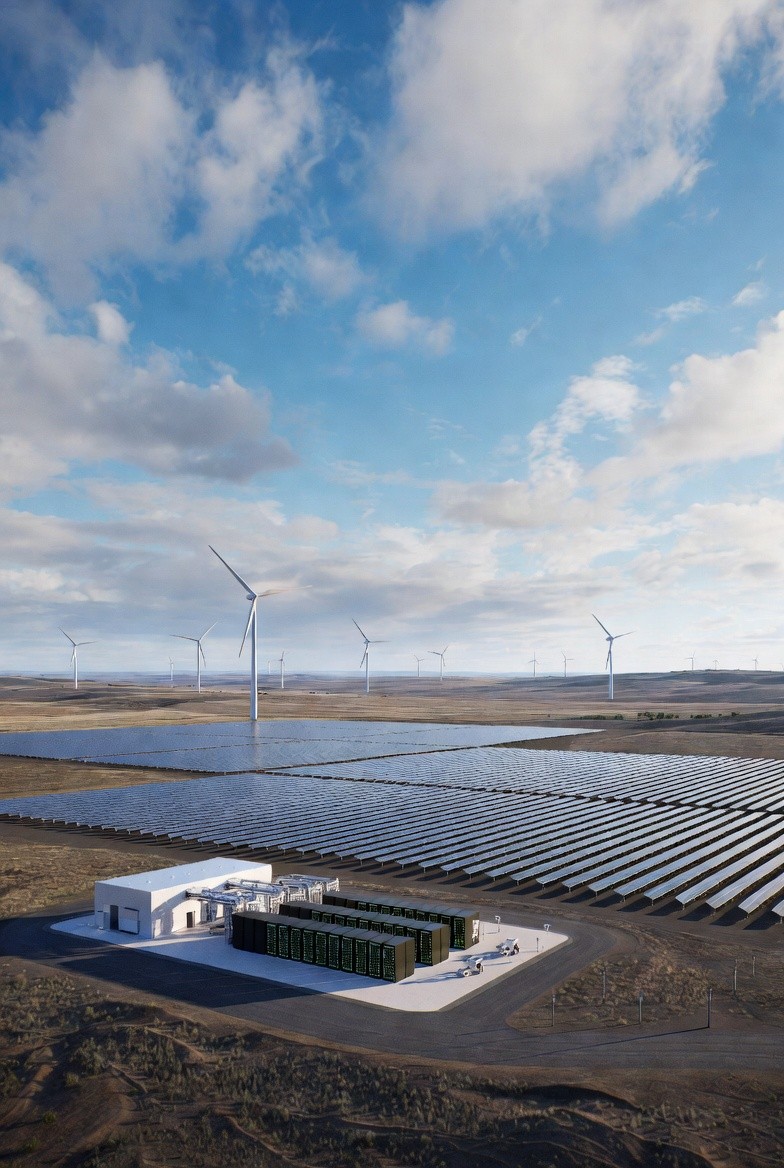
Serbia's Hidden Advantage: Why SolrX is Pioneering Europe's Next Data Center Frontier Belgrade, March 2026 — While hyperscalers race to secure renewable power for exploding AI demand, Europe's mature markets grapple with gridlock — literally. Interconnection queues average 4-5 years in Germany and the Netherlands, transmission costs eat 25-30% of delivered energy, and land prices near major fiber hubs have become prohibitive. Meanwhile, in Serbia, SolrX is quietly building what could become Europe's most capital-efficient green data campus, combining utility-scale solar economics with strategic connectivity at the continent's digital crossroads.
The Serbia Equation: Cost + Connectivity + Neutrality
Serbia isn't on most hyperscaler shortlists — yet. But beneath the surface lies a rare convergence of advantages that SolrX has methodically engineered into a bankable platform:
1. Latency-competitive connectivity: Positioned between Frankfurt (Europe's largest IX) and Istanbul, Serbia delivers 15-25ms round-trip times to Western Europe — competitive with Vienna or Warsaw, far superior to Turkey or Ukraine. Telekom Srbija's recent DWDM deployments ensure high-capacity fiber diversity to all major routes.
2. Industrial power baseline: Serbia maintains some of Europe's lowest industrial electricity tariffs (~€0.14-0.18/kWh), providing a natural floor for behind-the-meter solar economics. When paired with SolrX's transmission-free delivery, operators achieve 2-3x cost advantage over Northwest Europe.
3. Technological neutrality: Serbia welcomes operators from all ecosystems — US hyperscalers, Chinese cloud providers, Gulf sovereign funds — without the geopolitical restrictions increasingly common in the EU. This doubles the addressable tenant market overnight.
4. Government tailwinds: Recent MoUs to triple the Kragujevac state data center, import tax exemptions for servers, and fast-track permitting for strategic IT projects signal Belgrade's ambition to become Southeast Europe's digital hub.
Engineering Around Grid Reality
Serbia's EMS transmission operator implemented a renewable connection moratorium in 2024 due to balancing constraints — a classic emerging-market headache. Where most developers treat grid risk as an afterthought, SolrX made it the project's North Star.
Phase 1 (5 MW pilot) secures a signed connection study contract with EMS, exempting the project from postponement rules. This grid anchor enables scaled buildout (Phases 2-3) while private-wire corridors remain perpetually reserved for data-center tenants — completely bypassing grid export capacity entirely.
The result: solar revenue starts Day 1 via merchant sales to EPS, while data-center partners receive dedicated BTM supply unaffected by grid delays. Investors see this sequencing as sophisticated risk engineering, not blind optimism.
The Landlord Model: Maximum Upside, Minimum Risk
SolrX's Phase 4 data campus introduces what infrastructure funds call the "holy grail": dual revenue with asymmetric upside. The 55-hectare platform offers three paths:
Landlord Model (Primary): SolrX leases data-center-ready land + delivers BTM solar power. Tenants build/operate facilities. Dual cash flows: fixed €/ha land lease + €/MWh energy supply. Execution risk stays with specialized DC operators.
PPA Overlay: Solar SPV sells power via 15-year corporate PPA at fixed pricing. Land remains SolrX equity, providing downside protection if digital demand softens.
Co-Development (Selective): SolrX participates in campus shell alongside colocation partners, capturing 12-18× EBITDA multiples on operating digital infrastructure.
This structure mirrors successful European platforms like Vantage Data Centers or Global Switch, but at Balkan land costs with solar cost of energy ~€0.06/kWh.
Who Actually Wants This?
SolrX targets four tenant archetypes with acute power pain points:
Regional Hyperscalers: Oracle, Microsoft expanding Eastern Europe cloud footprints need green power to match Western sustainability standards.
Colocation Operators: United Group, Digital Realty equivalents seeking rack capacity for fast-growing Balkan enterprise demand.
AI/HPC Specialists: Core Scientific-style operators prioritizing energy economics over 1ms latency differences.
Industrial Champions: Serbian manufacturers needing green power to meet EU CBAM compliance and secure bank financing.
The "landlord model" lets SolrX stay focused on energy while colocation partners handle the execution-intensive data-center buildout.
Institutional Math That Works
For infrastructure investors, SolrX reads like a dream term sheet:
Solar Core (Phases 1-3): 7-9× EBITDA merchant yield, inflation-linked revenue, €6M land collateral.
PPA Upside: 9-11× with corporate offtake from industrial or digital tenants.
Data Campus Full: 12-18× blended multiples on operating colocation platform.
The phased structure lets conservative core funds enter early while growth equity captures the digital transformation. Every assumption — from €12-18/kWp opex to EMS reinforcement budgets — reflects actual Eastern European transaction data.
Timing Couldn't Be Better
Data centers will consume 8% of global electricity by 2030. Hyperscalers spent $75B on renewables in 2025 alone. Serbia's government just committed to tripling national data-center capacity. Fiber capacity between Frankfurt and Belgrade continues expanding.
SolrX didn't invent these trends — they built a platform sitting exactly at their intersection. Phase 1 construction starts Q3 2026. First data-campus LOIs expected mid-2027.
In a market where clean power is scarcer than GPU capacity, SolrX offers something genuinely rare: a diligenced path to scale compute in Europe with cost certainty, carbon certainty, and capacity certainty. Sometimes the best opportunities aren't where everyone is looking.