Insight
3/10/26
Why Solar Has Never Mattered More: The Iran War, Oil Prices and the Case for Energy Sovereignty
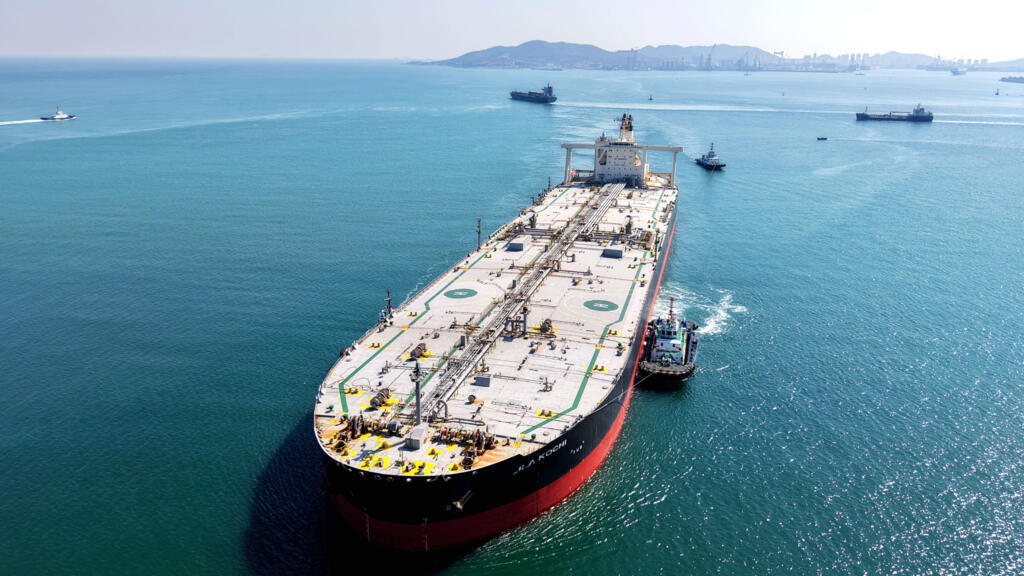
The world woke up differently on 1 March 2026. Overnight, US-Israeli strikes on Iranian nuclear and energy infrastructure triggered a 10% spike in oil prices, with Brent crude briefly touching $82 a barrel within hours and analysts at Reuters warning it could breach $100 if the Strait of Hormuz closure held. Within days, Brent surged well past that threshold as smoke rose from oil storage facilities in Tehran. A single geopolitical event had just suspended approximately 20% of global crude and natural gas supply — and with it, reminded every energy director, CFO, and infrastructure fund manager of one unignorable truth: fossil fuel dependence is a strategic liability.
The Strait of Hormuz: The World's Most Dangerous Energy Chokepoint
The Strait of Hormuz is a narrow waterway between Iran and Oman through which approximately 20 million barrels of oil flow every day — roughly 20% of all global petroleum liquids. Saudi Arabia, the UAE, Iraq, and Kuwait combined have been forced to halt shipments of up to 140 million barrels to international refiners as tanker owners, major oil companies, and trading houses suspended crude, fuel, and LNG shipments after Tehran warned vessels against transiting the waterway.
The economic consequences cascaded immediately. Oil prices jumped 7–10%, shipping costs surged, and stock futures sank globally. BNEF had flagged as recently as January 2026 that any disruption to Iranian supply — whether from conflict or sanctions — could push Brent to $91 by late 2026. The actual conflict overshot that estimate within a week.
For European energy buyers, already scarred by Russia's 2022 gas weaponisation, this was déjà vu at speed. At February's Munich Security Conference — just weeks before the Iran strikes — leaders warned explicitly that a new era of geopolitical instability was reshaping global energy security, urging governments to reduce dependence on hostile suppliers and stabilise prices through domestic clean energy.
Europe's Answer: Electrify, Decentralise, Localise
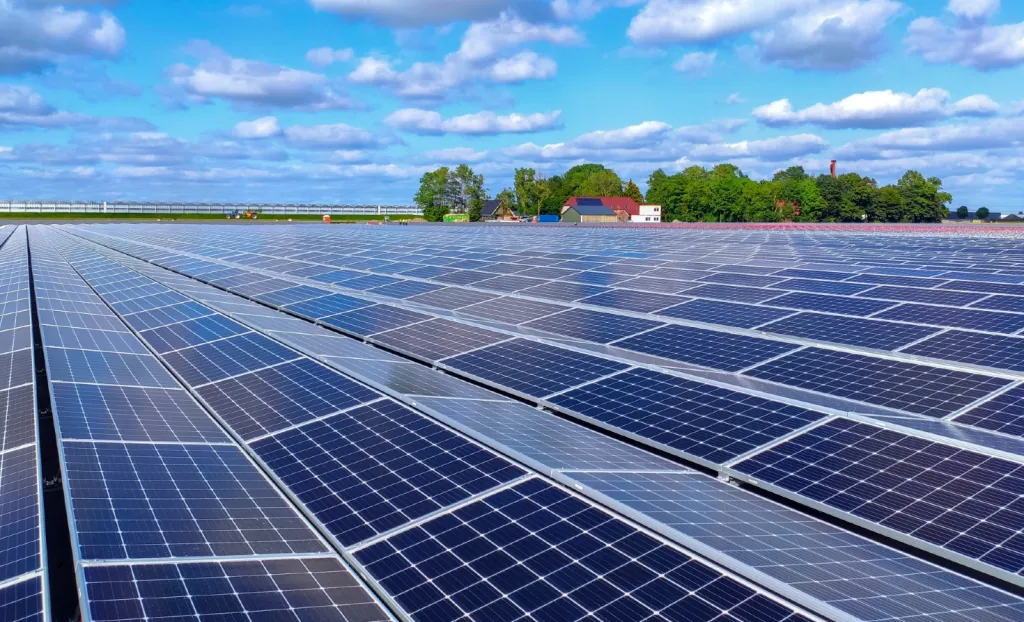
The strategic logic is now airtight. Every barrel of oil and cubic metre of gas priced by a conflict zone is a direct tax on European industry, cloud operators, manufacturers, and consumers. Solar energy — generated domestically, owned locally, priced predictably — is the structural antidote.
Shell's 2026 Energy Security Scenarios, published this month, identify electrification and renewable localisation as the central response mechanism across all three future pathways. Whether the world fragments into geopolitical blocs ("Archipelagos"), accelerates through AI demand ("Surge"), or transitions cleanly ("Horizon"), the common thread is the same: nations and corporations that have secured their own clean power supply are insulated from the volatility that is currently breaking energy markets.
Solar is not merely a climate decision anymore. It is a national security and corporate resilience decision.
Serbia: Quietly Becoming Europe's Most Strategic Solar Location
While Western Europe debates energy independence in parliament, Serbia is building it in the ground. In 2025 alone, Serbia installed a record 134.3 MW of solar — led by large-scale utility plants, with a gigawatt-scale pipeline now actively under development. Construction on a 1 GW solar portfolio for state utility EPS began in early 2026, making it one of the largest renewable projects in European history.
Why Serbia? Because the numbers are simply better than almost anywhere else on the continent:
Industrial electricity prices among the lowest in Europe — even before solar offsets
~1,250 kWh/kWp annual irradiation — competitive with southern Spain
Direct rail and road logistics to Frankfurt, Vienna, and Istanbul
Technologically neutral jurisdiction — open to both Western and Eastern technology partners
Rapidly maturing grid infrastructure with EMS actively processing connection applications
For data centres, AI compute clusters, and industrial manufacturers facing CBAM carbon border costs, Serbia's combination of low-cost land, improving grid capacity, and solar irradiation is becoming one of Europe's most compelling energy arbitrage plays — especially as oil-linked industrial tariffs in Western Europe spike with every Middle East escalation.
The Data Centre Dimension: Solar Is Now an AI Infrastructure Decision
The Iran conflict has exposed something else: the AI revolution has a power problem. Hyperscalers — Microsoft, Google, Oracle, and their co-location partners — are racing to deploy compute clusters across Europe to meet exploding demand for AI inference and training. Every one of those clusters runs 24/7 and requires firm, low-carbon power.
Grid-connected power in Germany currently runs at approximately €200/MWh. In Serbia, industrial tariffs sit near €100/MWh. A behind-the-meter solar asset in Serbia, with private wire connection, can deliver power at approximately €60/MWh — structurally cheaper than any grid-connected alternative in Western Europe, and completely decoupled from Hormuz disruptions, Iranian escalation timelines, or OPEC+ quota decisions.
This is not a marginal advantage. At scale, for an operator running 30 MW of compute load, the difference between €200/MWh German grid power and €60/MWh Serbian solar-direct power amounts to €42 million per year in operating cost savings.
The Investment Case: De-Risked by Conflict
Paradoxically, geopolitical instability makes solar assets more attractive to institutional investors, not less. As oil-linked revenues become volatile and fossil infrastructure faces both physical and regulatory risk, infrastructure funds and pension managers are accelerating their rotation into contracted renewable assets with predictable EBITDA and tangible land collateral.
The SolrX Belgrade Helios Park is engineered precisely for this environment: 40 hectares of freehold land, 32 MWp of Tier-1 generation at €0.34/W CAPEX — 28% below European benchmarks — with €2.6M target annual EBITDA and a phased de-risk structure that delivers Phase 1 revenue before full capital is deployed. The optional data campus expansion positions the asset to capture the AI infrastructure wave at one of Europe's most competitive energy cost points.
When Brent trades above $100 and 20% of global gas supply is suspended, the question for every investor is no longer whether to hold clean energy infrastructure. It is where, at what cost, and with what collateral.
Serbia answers all three.